
K12 Wellness
← All programs

STUDENT INSIGHT & TIERED SUPPORT

Terrace Metrics

Understand students. Inform support. Track progress.

Evidence-based indicators of student resilience and behavioral health, connected to Tier 1, 2, and 3 supports. Schools can understand student strengths and needs, provide targeted support, and monitor progress within their existing MTSS framework.

Students collaborating around a laptop
Audience
K–12 student support teams
Student time
About 15 minutes for assessment
Framework
Insight, Tier 1–3 support, and monitoring

THE PURPOSE

Understand what is influencing readiness to learn.

Attendance, behavior, and academic results can show that a student is struggling without explaining what is contributing to the difficulty. Terrace Metrics adds student voice and evidence-based resilience and adversity indicators. Schools receive a clearer view of strengths and needs, connected to resources they can use to provide tiered support.

WHAT’S INCLUDED

From indicators to support

Resilience indicators

Areas include hope, grit, leadership, personal standards, satisfaction with life, positive school experiences, and social resiliency. The aim is to understand protective strengths as well as areas that would benefit from support.

Adversity indicators

Areas include anxiety, depressive symptoms, self-criticism, exclusion by peers, current traumatic stress, substance-use concerns, and aggression. Age-appropriate indicator selection lets schools match the assessment to their students and priorities.

Tier 1 classroom resources

Universal lessons build understanding and skills related to selected indicators. The Tier 1 sequence includes three lessons, typically 35–45 minutes each, with opportunities to recognize behaviors and apply new strategies.

Tier 2 small-group resources

Targeted curricula provide a more focused sequence, typically six or seven lessons facilitated by a school counselor. Activities explore needs, build skills, and help students identify adults and peers they can turn to for support.

Tier 3 intensive support

Resources for school-based professionals provide more intensive skill development and progress checks. The anxiety-focused Tier 3 protocol requires facilitator training and is intended for qualified student-support personnel.

Reports for coordinated action

Immediate reporting supports designated staff and families. Individual and broader school-level views help teams align support, monitor change, and consider where classroom or schoolwide practices need attention.

IN YOUR SCHOOL

How it can fit your team’s work.

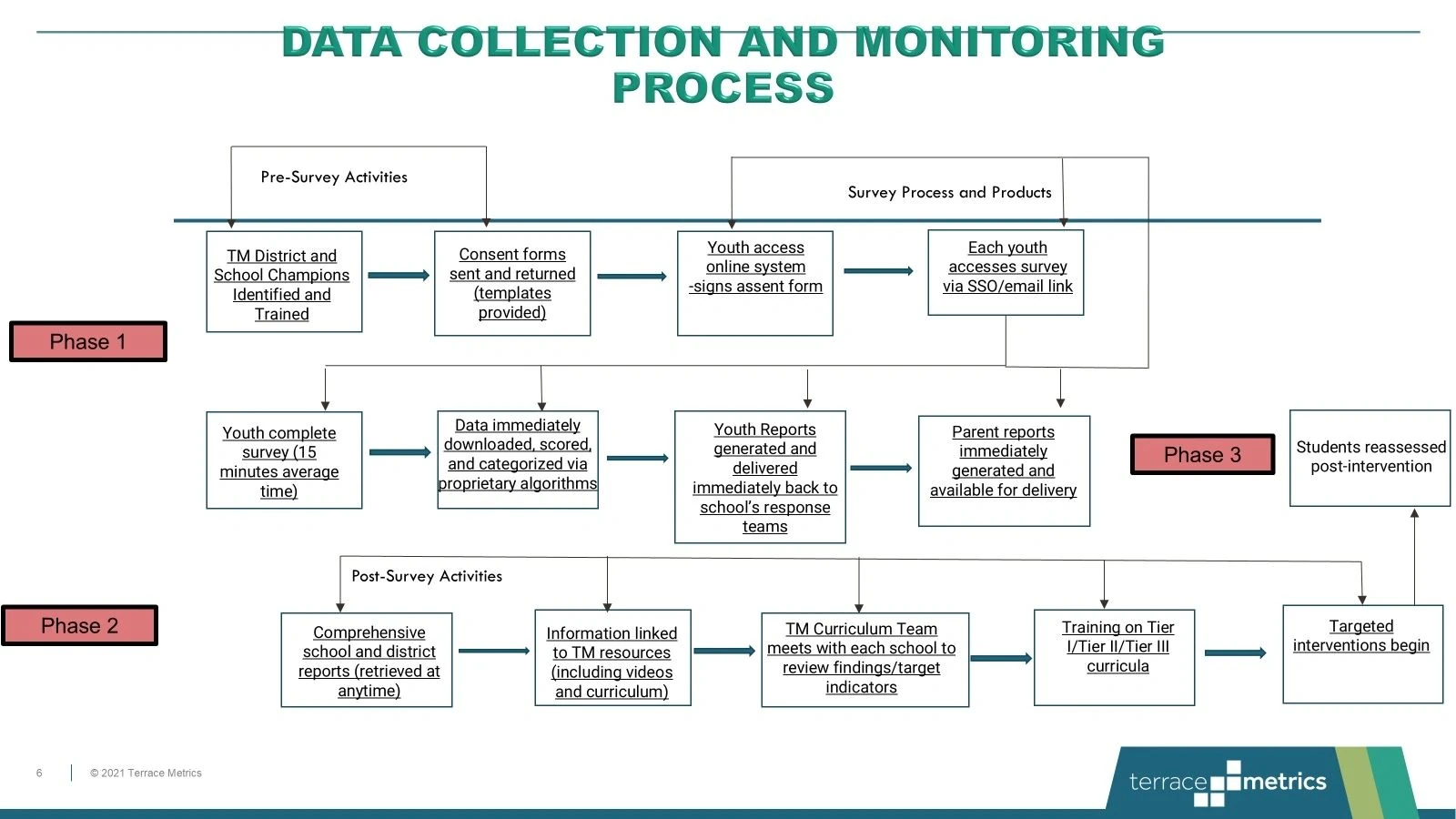
  1. 01

    Prepare

    Define the student population, indicators, staff responsibilities, and communication process.

  2. 02

    Listen and understand

    Students complete a brief online assessment using evidence-based indicators.

  3. 03

    Provide support

    Use the results to inform classroom, small-group, or individual support with aligned resources.

  4. 04

    Monitor progress

    Reassess and review change over time to inform adjustments across MTSS tiers.

RESEARCH & APPROACH

Evidence-based indicators. Resources tied to the findings.

Terrace Metrics grounds its indicators in peer-reviewed research on resilience, behavioral health, and educational outcomes. Indicators provide a structured snapshot of student strengths and needs; the value is in connecting that information to support and monitoring over time.

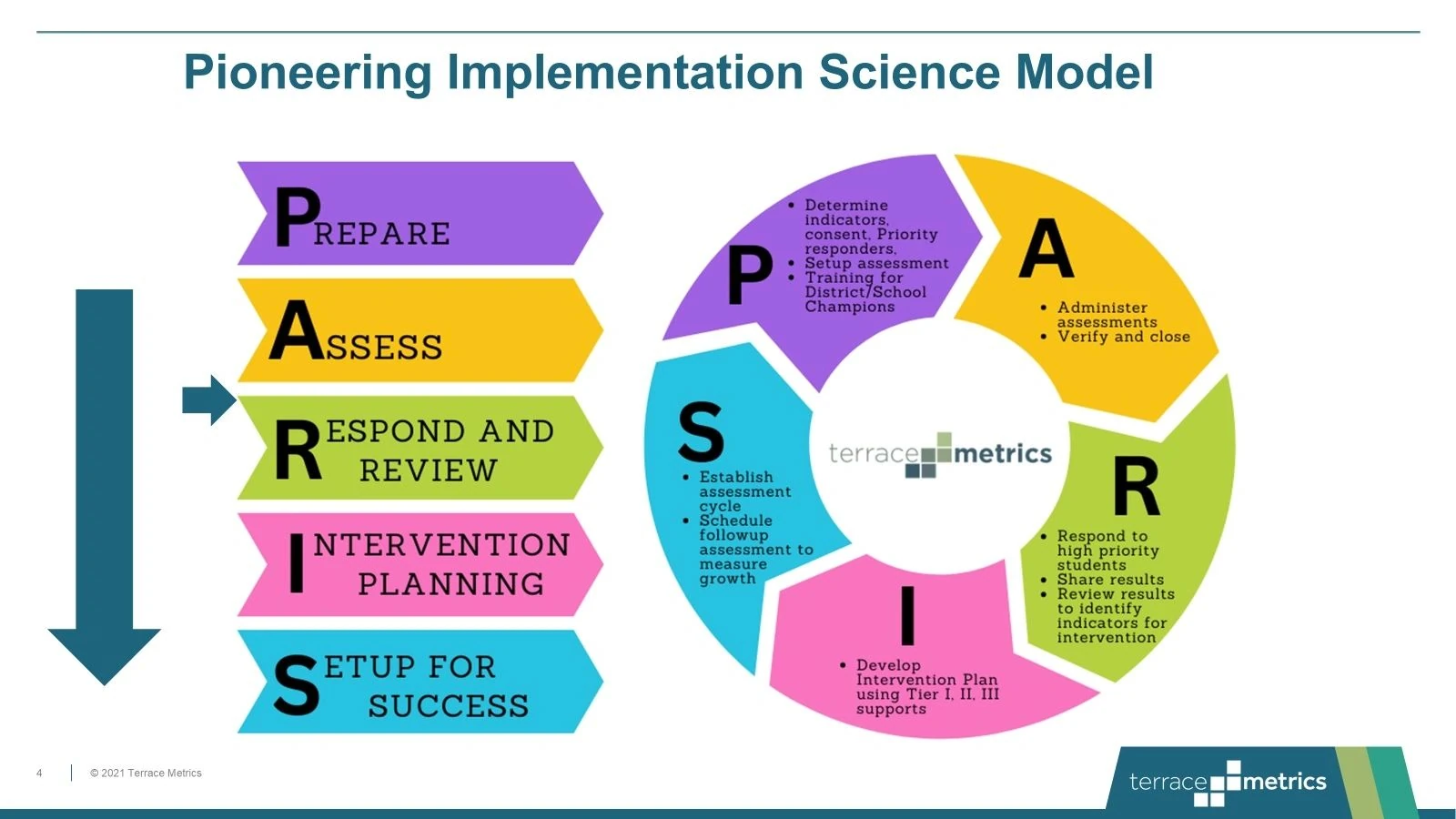
The PARIS implementation approach gives schools a staged process for assessment, response, and continued improvement. Training helps support teams interpret results and use aligned curricula. This supports MTSS and PBIS work already underway rather than requiring schools to treat student insight as a separate initiative.

The platform uses encryption, designated permissions, and school-specific data separation. Only designated school staff can see student responses. K12 Wellness can coordinate a review of reports, family communication, access permissions, and implementation requirements.

Ask about the research and implementation

COMMON QUESTIONS

More about Terrace Metrics.

Is Terrace Metrics only a way to collect student data?

No. It connects student indicators with Tier 1, 2, and 3 resources and ongoing monitoring. The intended use includes providing support and checking how needs and strengths change.

What grade levels can use it?

Selected indicators can be used as early as kindergarten. Indicator selection and delivery should reflect the students’ ages and your priorities.

Who typically uses the results?

Student services leaders, counselors, psychologists, social workers, MTSS and PBIS teams, and designated administrators. Access is assigned according to role and responsibility.

How much time does it require?

The online student assessment is designed to take about 15 minutes. Staff time depends on preparation, the supports selected, and the monitoring cycle. Tier 3 implementation includes specific facilitator training.

LET’S START WITH YOUR PRIORITIES

Learn more about
Terrace Metrics.

Share your priorities and questions about Terrace Metrics. Our team will help you review the program and the next step.

info@k12wellness.com ↗

K12 Wellness
Supporting schools and community partners.

Opens your email app with your message ready to review and send.